These ciphersuites and protocols are disabled in the DEFAULT crypto coverage level. They may be enabled by switching the system crypto policy level to LEGACY. A safety problem has been identified in the Bosch MAP 5000 family ofproducts, which stems from the use of insecure cryptographic algorithmsin the SSH service configuration. It might expose systems to cryptographicattacks, unauthorized entry, or knowledge leakage.
Up To Date On:
It permits the TLS 1.2 and 1.three protocols, in addition to the IKEv2 and SSH2 protocols. The RSA keys and Diffie-Hellman parameters are accepted if they are no less than 3072 bits lengthy. If your system communicates on the public web, you would possibly face interoperability problems. When a system-wide policy is set up, functions in RHEL follow it and deny utilizing algorithms and protocols that do not meet the policy, unless you explicitly request the application to do so. That is, the policy applies to the default habits of applications when running with the system-provided configuration however you probably can override it if required.
Prioritize Aes 256 On The Client
- Customization of system-wide cryptographic policies is out there from RHEL 8.2.
- Also, create the next crypto policy module to disable the Diffie-Hellman Group14 key trade algorithms (diffie-hellman-group14 and diffie-hellman-group14-sha1) on RHEL eight.
- Additionally, utilizing sturdy algorithms often will increase the computational workload, which may negatively affect your system performance.
- As A Result Of the SHA-1 hash perform has an inherently weak design, and advancing cryptanalysis has made it vulnerable to assaults, RHEL eight doesn’t use SHA-1 by default.
- TheCVSS environmental score is restricted to each customer’s surroundings andshould be defined by the client to attain a last scoring.
- Here are the configuration settings that control the cryptographic algorithms choice.
Whereas prior to now we did not disable algorithms in a consistent way (different applications utilized totally different policies), at present we’ve a system-wide coverage which is followed by all RHEL crypto core parts. These insurance policies enable us to consistently handle and deprecate algorithms system-wide. Selections about coverage contents are based on documents like RFC 7457 which provides a list of attacks benefiting from legacy crypto algorithms. You can also remove a symlink related to your software from the /etc/crypto-policies/back-ends listing and exchange it with your personalized cryptographic settings. This configuration prevents using system-wide cryptographic insurance policies for purposes that use the excluded back end. These ciphersuites and protocols can be found but disabled in all crypto coverage levels.
7 Disabling Sha-1 By Customizing A System-wide Cryptographic Policycopy Linklink Copied To Clipboard!
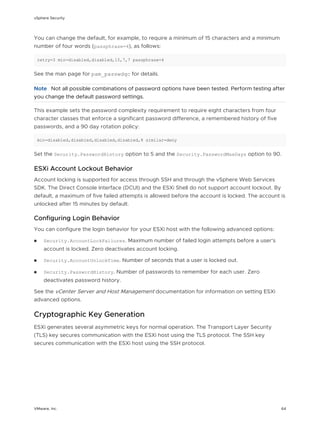
After applying crypto-policy adjustments or customizing your SSH configuration, it’s important to verify that the weak algorithms are no longer accepted by the server. With Out proper validation, susceptible settings could silently persist, particularly if policy modules or defaults were not utilized as intended. Purple Hat allows administrators to increase or modify system-wide cryptographic settings by way of the usage of custom policy modules. These modules are simple text recordsdata that allow you to allow or disable particular cryptographic algorithms, tailored to your environment’s security requirements. These flagged vulnerabilities remained regardless of explicitly configuring safe settings in /etc/ssh/sshd_config across our Pink Hat systems (RHEL 7, 8, and 9).
For environments that require to be suitable with Red Hat Enterprise Linux 6 and in some instances also with earlier releases, the less safe LEGACY policy degree is on the market. The default selection of algorithms for every stage should be https://powermat.com/news/press-releases/powermat-unveils-300w-wireless-charging-platform-with-integrated-beacon-docking-technology-for-autonomous-mobile-robots-amrs-and-commercial-robotics/ ok for the majority of deployment scenarios. Sometimes, nonetheless, a compliance rule, or a set of legacy servers, or something else, requires a change on this selection. Maybe a legacy system or piece of hardware that’s nonetheless in manufacturing just isn’t compatible with the present encryption schemes and requires legacy algorithms to be enabled once more. Or a compliance rule that isn’t up-to-date with the current crypto standards doesn’t permit a more advanced cipher. Fastidiously study the total output, verify every section together with key exchange, encryption ciphers, MACs, and host keys.